
If you have just filed a claim, you are probably wondering what does an insurance adjuster do, exactly, and how much of the outcome depends on that one person. The short answer: the adjuster investigates the loss, decides what the policy covers, writes an estimate of what it costs to fix, and recommends a payment. The longer answer explains why two adjusters can look at the same roof and reach very different numbers.
I worked as an independent adjuster for 8 years before becoming a Texas public adjuster, so I have answered the question of what does an insurance adjuster do from the inside. This article walks through the job step by step, from the first phone call to the check, and points out where policyholders can protect themselves along the way.
Step one: the assignment and first contact
When you report a claim, the carrier opens a file and assigns it. Small claims may go to a desk adjuster who never visits. Larger or more complex claims go to a field adjuster, who might be a staff employee or an independent adjuster hired through an outside firm. After a big DFW hail storm, carriers often bring in hundreds of independent adjusters from across the country.
Under Texas Insurance Code Chapter 542, the insurer generally must acknowledge the claim, begin its investigation and request the information it needs within 15 days of receiving notice. That first call or email from the adjuster is usually how that happens. Write down the adjuster's name, phone number, email and the claim number. You will use them constantly.
Step two: the inspection
The inspection is the heart of what an adjuster does. On a typical hail or wind claim, the adjuster will:
- Walk the exterior and photograph each elevation.
- Inspect soft metals such as gutters, vents and AC fins, which show hail size and direction.
- Climb the roof, or send a ladder-assist inspector, and mark test squares to count hits.
- Measure the roof, often with aerial imagery or a measurement report.
- Look at interior damage such as ceiling stains, and sometimes the attic.
On a water claim, the adjuster will want to find the source, determine whether the leak was sudden or long-term, and review moisture readings and mitigation records. On a fire claim, the carrier may bring in an origin-and-cause investigator first.
Inspections on busy storm days can be fast. An adjuster with eight claims scheduled that day may spend less than an hour at your house. That is why it helps to have a list ready of every area you have noticed damage.
Step three: coverage decisions
Next, the adjuster compares what he found to your policy. Questions include: was this damage caused by a covered peril? Does an exclusion apply, such as wear and tear, long-term seepage, earth movement or cosmetic damage? What is the deductible, and is there a separate wind and hail deductible? Does the policy pay replacement cost or actual cash value on the roof?
Adjusters often have limited authority to make coverage decisions on their own. Complex or unusual questions are escalated to an examiner or supervisor, and sometimes to coverage counsel. That is one reason an adjuster may say one thing at your house and the letter may say something different.
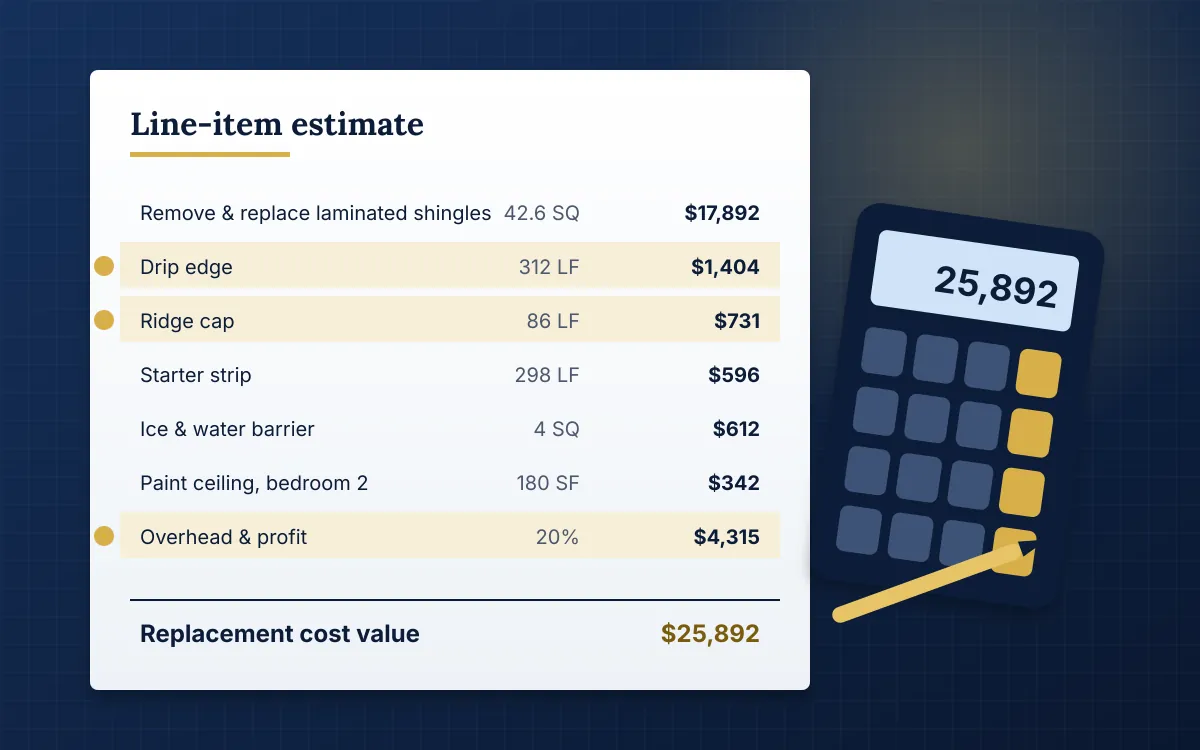
Step four: so what does an insurance adjuster do with the estimate?
The adjuster writes an estimate, usually in software such as Xactimate, which prices line items from regional price lists. Each item, from tear-off to drip edge to ridge vent to painting a wall, gets a quantity and a unit price. Then depreciation is applied to calculate actual cash value, and the deductible is subtracted.
This is where claims are most often underpaid. Not usually because of a deliberate decision, but because of omissions: items not inspected, code requirements not included, overhead and profit left out, quantities measured short or repair chosen over replacement. When I was adjusting claims, files were reviewed for whether the estimate was supportable, not whether it was generous. The safest estimate for an adjuster is one built around what is clearly visible and clearly documented.
Step five: review, approval and payment
Independent adjusters submit their report and estimate to the carrier, where an examiner reviews it. Staff adjusters may approve smaller payments within their own authority. Larger amounts need a supervisor.
Under Chapter 542, once the insurer has all the items it requested, it generally has 15 business days to accept or reject the claim, and must pay within 5 business days after notifying you that it accepts it. The carrier can extend the decision period by up to 45 days if it notifies you and explains why. After a declared weather catastrophe, some of these deadlines may be extended by additional days.
If the policy pays replacement cost, you usually receive actual cash value first and can recover the withheld depreciation after repairs are done.
What an insurance adjuster does not do
A carrier's adjuster does not represent you. He will not point out coverage you did not ask about, help you file for contents you forgot, or argue for a full roof replacement if the guidelines allow a repair. He is also not there to give you legal advice. That is not a criticism; it is simply the job description. The adjuster's client is the insurance company.
If you want someone in that role who works for you, that is what a public adjuster is. Our comparison of company, independent and public adjusters explains the differences, and our residential claim service page explains how we handle home claims.
How to work effectively with your adjuster
- Be present for the inspection and walk the adjuster to every area of damage.
- Take your own photos before and after the inspection, with dates.
- Keep everything in writing. Follow up phone calls with a short email summarizing what was said.
- Ask for a copy of the estimate and read it line by line.
- Get contractor bids to compare against the estimate.
- Ask questions about anything you do not understand, including depreciation, deductibles and exclusions.
If the estimate does not match reality, you can ask for a re-inspection, submit additional documentation, or bring in a Dallas insurance adjuster who represents you.
Frequently asked questions
Is the insurance adjuster on my side?
The adjuster sent by your carrier works for the carrier, whether they are a staff employee or an independent contractor. They should handle your claim fairly and follow Texas law, but they are not your advocate.
How long does an adjuster inspection take?
A typical residential hail inspection may take 30 minutes to two hours. Large losses and commercial properties take much longer, sometimes multiple visits.
Can I disagree with the adjuster's estimate?
Yes. You can submit your own documentation and contractor estimates, request a re-inspection, hire a public adjuster, or, if the policy has an appraisal clause and the dispute is about the amount, invoke appraisal.
Have a claim that does not add up? Get a no-cost review from a licensed public adjuster with 8 years adjusting claims.