
When a storm or a burst pipe damages your house, the first home insurance adjuster you meet works for the carrier. That adjuster may be fair and competent, but the estimate he writes is reviewed and approved by the insurance company. We give DFW homeowners their own licensed adjuster, someone who inspects, estimates and negotiates for the household rather than the insurer.
Joseph Dittman worked as a home insurance adjuster on Texas residential claims. He knows the common shortcuts and the guidelines that create them, and now he puts 8 years adjusting claims to work for homeowners, for homes from Fort Worth's older neighborhoods to new construction in Mansfield and Denton.
Residential losses we handle
- Hail and wind: roofs, gutters, siding, windows, screens, fences, AC fins and outdoor fixtures. North Texas sees some of the most frequent damaging hail in the country.
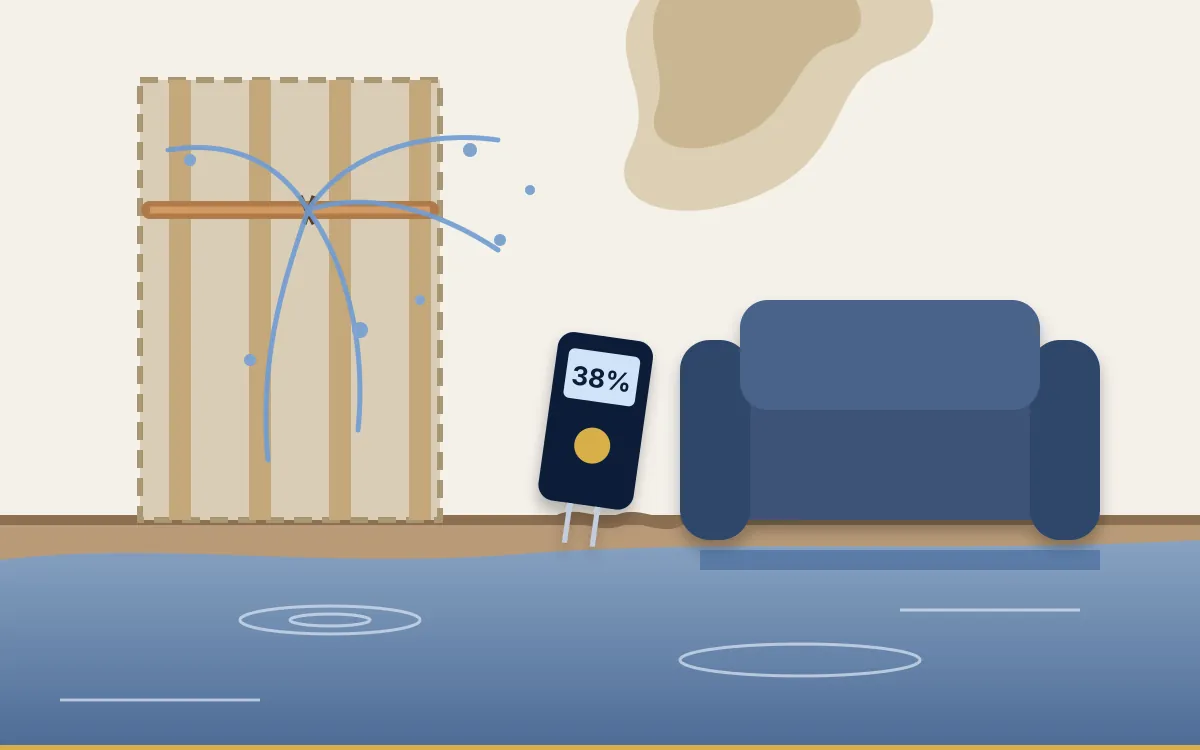
- Water: sudden pipe bursts, supply line failures, water heater leaks, slab leaks and the resulting mold or tear-out.
- Freeze: pipes that split during hard freezes like Winter Storm Uri in February 2021, which caused widespread burst pipes across DFW.
- Fire and smoke: kitchen fires, electrical fires, and smoke or soot that spreads well beyond the burned room.
- Fallen trees, vehicle impact and other sudden events.
Where a carrier's home insurance adjuster estimate usually falls short
In residential claims, the dollars rarely disappear in one big decision. They leak out through many small ones:
- Roof slopes repaired instead of replaced, even when the shingles have been discontinued and a repair cannot match.
- Missing line items: drip edge, starter course, ridge vents, step flashing, satellite detach and reset, permit fees.
- Interior water damage written as a paint job, with no drywall replacement, insulation, baseboard or flooring.
- Code-required upgrades left out even though the policy includes ordinance or law coverage.
- General contractor overhead and profit omitted on jobs that need multiple trades.
- Contents, additional living expense and debris removal not claimed at all.
We look for each of these, document them, and present them with the policy language that supports payment.
Understanding depreciation and replacement cost
Many Texas homeowners policies pay replacement cost in two steps. First the carrier pays actual cash value (replacement cost minus depreciation). After repairs are done, you can claim the withheld depreciation. Some policies, especially on roofs, pay only actual cash value or use a roof payment schedule. Knowing which you have changes how the claim should be handled, and it is one of the first things we check.
How a residential claim moves with us
- Free review of your policy and any estimate you already have.
- Our own inspection, including roof, attic, interior and exterior.
- A detailed estimate priced for the current DFW market.
- Presentation to the carrier and a joint re-inspection when needed.
- Negotiation until the claim is resolved, or appraisal when the dispute is purely about the amount.
Frequently asked questions
Should I let my insurance company's adjuster inspect before I hire a public adjuster?
You can hire us before or after the carrier inspects. If you call first, we can attend the carrier's inspection with you and point out damage on the spot.
Will hiring a public adjuster raise my premium?
Premiums are driven by the claim and the carrier's rating rules, not by who represents you. Hiring a public adjuster does not by itself change your claim history.
What if my roofer already gave me an estimate?
Bring it. A contractor estimate is useful, but carriers often respond better to a line-item estimate in their own format that ties every item to the policy.
Have a claim that does not add up? Get a no-cost review from a licensed public adjuster with 8 years adjusting claims.