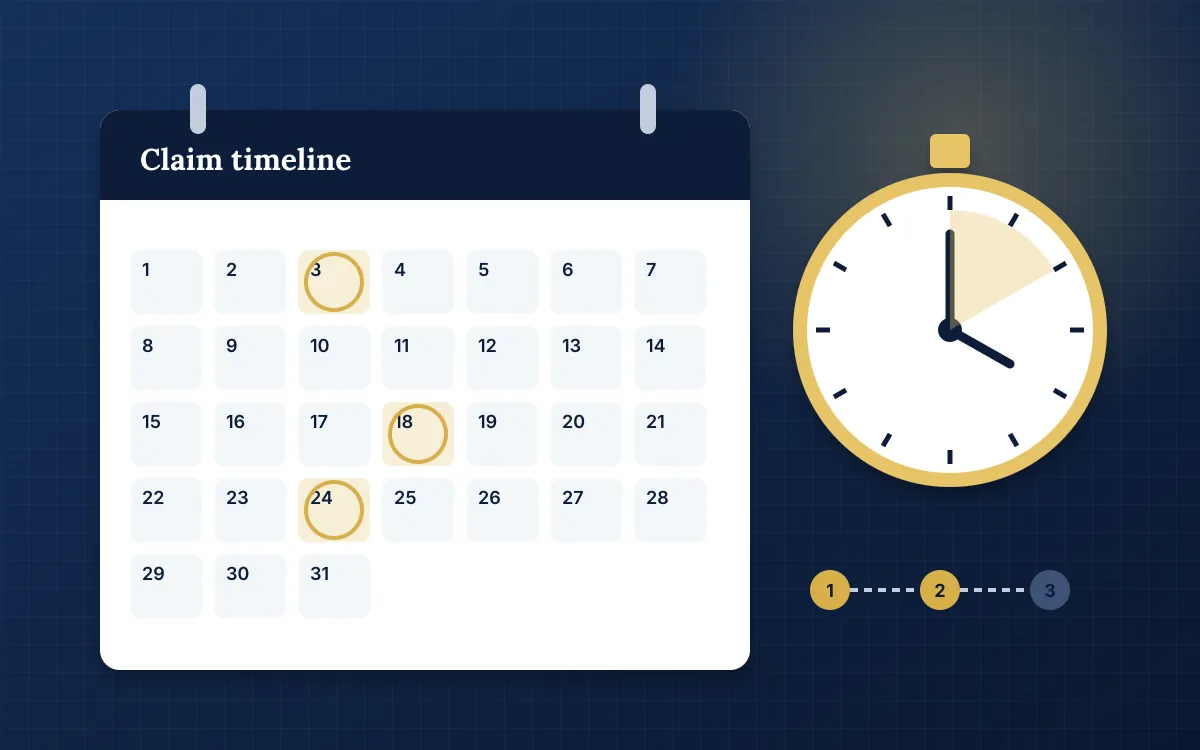
How long does an insurance adjuster take to show up after you file a claim in Texas? There is no single statewide inspection deadline written as “the adjuster must be at your house within X days.” Instead, Texas law sets deadlines for the insurer to acknowledge your claim, begin its investigation, request information, make a decision and pay. The inspection has to happen within that framework.
Understanding the answer to how long does an insurance adjuster take under the Texas prompt payment rules helps you know when a delay is normal and when it is a problem worth escalating. With 8 years adjusting claims, I worked within these deadlines daily. Here is how they work and what to do when they are missed.
The Texas prompt payment law: Insurance Code Chapter 542
Texas's prompt-pay statute lives in Insurance Code Chapter 542, Subchapter B, and it reaches most first-party property claims. In general terms:
- 15 days: the carrier has 15 days from receiving notice to acknowledge the claim, start investigating, and ask for the items, statements and forms it reasonably believes it needs. Some insurers have a longer acknowledgment window based on their size, but 15 days is the general rule.
- Within 15 business days after receiving all the items it requested, the insurer must notify you in writing whether it accepts or rejects the claim. A rejection must state the reasons.
- If it needs more time, the insurer must notify you and explain why. It then generally has up to 45 additional days to decide.
- Within 5 business days after notifying you that it will pay, the insurer must make the payment.
When the governor or commissioner declares a weather-related catastrophe, these deadlines may be extended by an additional 15 days.
So how long does an insurance adjuster take to inspect?
Because the insurer must begin its investigation within 15 days, most inspections are scheduled within the first couple of weeks on normal claims. After major storms, the carrier may still make first contact within the deadline but schedule the physical inspection later because of the volume. Desk adjusters on smaller claims may ask you for photos instead of sending someone.
In my 8 years adjusting claims, routine claims were often inspected within a week or two. After big DFW hail storms, it could take several weeks to get to everyone. If you have not heard from anyone within 15 days of reporting, follow up in writing.
What can slow things down
- Catastrophe volume: after major storms, thousands of claims land at once.
- Missing information: the clock for the decision starts after the insurer receives the items it requested.
- Specialists: engineers, leak detection or origin-and-cause investigators can add time.
- Reassignment: files sometimes move between adjusters.
- Disputes: disagreements over scope, coverage or price can stretch the process.

What happens if the insurer misses the deadlines
Under Section 542.060, if an insurer is liable for a claim and fails to comply with the prompt payment requirements, it may owe interest on the claim amount plus reasonable attorney's fees, subject to the specific rules that apply. For many weather-related claims, Chapter 542A changes how those remedies are calculated and requires pre-suit notice, generally at least 61 days before filing suit. Those are legal questions; talk to a Texas attorney if you think penalties may apply.
How to keep your claim on schedule
- Report the claim promptly and write down the date.
- Respond quickly to every request for documents.
- Confirm in writing what the insurer has asked for and when you sent it.
- Keep a claim log with dates, names and promises.
- Follow up in writing when a deadline passes.
- If delays continue, request a supervisor, and consider a complaint to the Texas Department of Insurance.
A sample timeline on a DFW hail claim
Here is how the deadlines might play out on an ordinary residential hail claim, with no catastrophe extension:
- Day 0: You report the claim on May 1.
- By about May 16: The insurer acknowledges the claim, opens its investigation and asks for photos, a signed authorization and perhaps a contractor estimate.
- May 20: The adjuster inspects the roof and exterior.
- May 28: You send the last requested item.
- Within 15 business days after May 28: The insurer must accept or reject the claim in writing, unless it notifies you that it needs more time.
- Within 5 business days after acceptance: Payment is due.
The key point is that the decision clock generally runs from receipt of all requested items, so promptly sending documents, and confirming in writing what you sent and when, keeps the timeline tight.
Catastrophe seasons in North Texas
Spring in North Texas regularly brings hail storms that generate tens of thousands of claims in a matter of days. When that happens, carriers activate catastrophe teams and bring in independent adjusters from out of state. Early contact usually still happens on time, but the physical inspection can slip. If a weather catastrophe has been declared, the statutory deadlines may also extend by 15 days. Ask the carrier directly whether an extension applies to your claim, and write down the answer.
While you wait, protect the property. Tarp a damaged roof, dry out wet areas and keep receipts. Policies require reasonable steps to prevent further damage, and those emergency costs are usually part of the claim.
What a delay really costs
Delays are not just inconvenient. Water damage left untreated can grow into mold. Roofing contractors book up quickly after a storm, pushing your repair date out. And the longer a claim drags, the more likely it is that new damage from a later storm complicates the question of what caused what. That is why it is worth escalating a stalled claim promptly instead of waiting patiently for months.
Your deadlines, not just theirs
Your policy also imposes duties on you: prompt notice, protecting the property from further damage, providing requested documents, and sometimes submitting a sworn proof of loss within a stated time. Many policies have a time limit for recovering depreciation and a contractual limit for filing suit, often two years from the date of loss or denial. Read your policy or have us read it.
If your claim is stuck, a Dallas insurance adjuster who represents you can follow up with the carrier, document deadlines and push the claim forward. See also our guide on what to do when your insurance adjuster is not responding.
Frequently asked questions
Is there a Texas law that says when the adjuster must inspect?
Not as a separate inspection deadline. The insurer must begin its investigation within 15 days of notice, and the inspection is usually part of that investigation.
What if I cannot be home for the inspection?
Ask to reschedule, or have someone you trust attend. Your public adjuster can attend on your behalf.
Do the deadlines apply to commercial claims?
Chapter 542 applies to many first-party claims, including many commercial property claims, with some exceptions. Check with an attorney for specific situations.
Have a claim that does not add up? Get a no-cost review from a licensed public adjuster with 8 years adjusting claims.