
Can I fire my insurance adjuster? It is one of the most common questions frustrated policyholders ask. Technically, no: the adjuster works for your insurance company, so you cannot fire them. But you are not stuck either. You can ask for a different adjuster, escalate to a supervisor, file a complaint with the Texas Department of Insurance, or hire your own adjuster to represent you.
When people ask “can I fire my insurance adjuster,” they usually mean something more specific: the adjuster is unresponsive, dismissive, inaccurate or seems to be working against them. With 8 years adjusting claims, I can tell you what carriers actually do when they receive those requests and how to make yours effective.
Why you cannot fire the carrier's adjuster
The adjuster is assigned by the insurer, whether as a staff employee or as an independent adjuster from an outside firm. You are not the adjuster's employer or client. So while you cannot terminate the relationship, the carrier can reassign the claim, and carriers do reassign files when there is a good reason.
How to request a new adjuster
- Find out who supervises the claim. Ask the adjuster or call the carrier's claims line and ask for the supervisor or claims manager on your file. If the adjuster is an independent, the carrier will also have an examiner overseeing the file.
- Put your request in writing. Email is fine. Be specific and factual: dates of unreturned calls, missed deadlines, inaccurate statements, items left off the estimate.
- Ask for a specific remedy. Request reassignment, a re-inspection by a different adjuster, or a supervisor review of the estimate.
- Keep it professional. A calm, documented request is much more likely to be acted on than an angry one.
Can I fire my insurance adjuster for a lowball estimate?
A low estimate alone may not lead to reassignment, because the carrier may consider it accurate. Instead, focus on fixing the estimate: submit photos, contractor bids and specific line items that are missing. Ask for a re-inspection. If the dispute is purely about the amount and your policy has an appraisal clause, appraisal may be an option. Read more in our article on insurance adjuster lowballing.
Filing a Texas Department of Insurance complaint
If you believe your claim is being handled improperly, such as missed statutory deadlines, unexplained denials or no response, you can file a complaint with TDI online at tdi.texas.gov or through its consumer help line. TDI will contact the insurer and require a response. A complaint does not decide your claim, but it often gets the carrier's attention.
Texas Insurance Code Chapter 542 sets timelines: acknowledging a claim and starting the investigation within 15 days, deciding within 15 business days after receiving the requested items (with a possible 45-day extension), and paying within 5 business days after acceptance. Missed deadlines are worth documenting.
Hiring your own adjuster
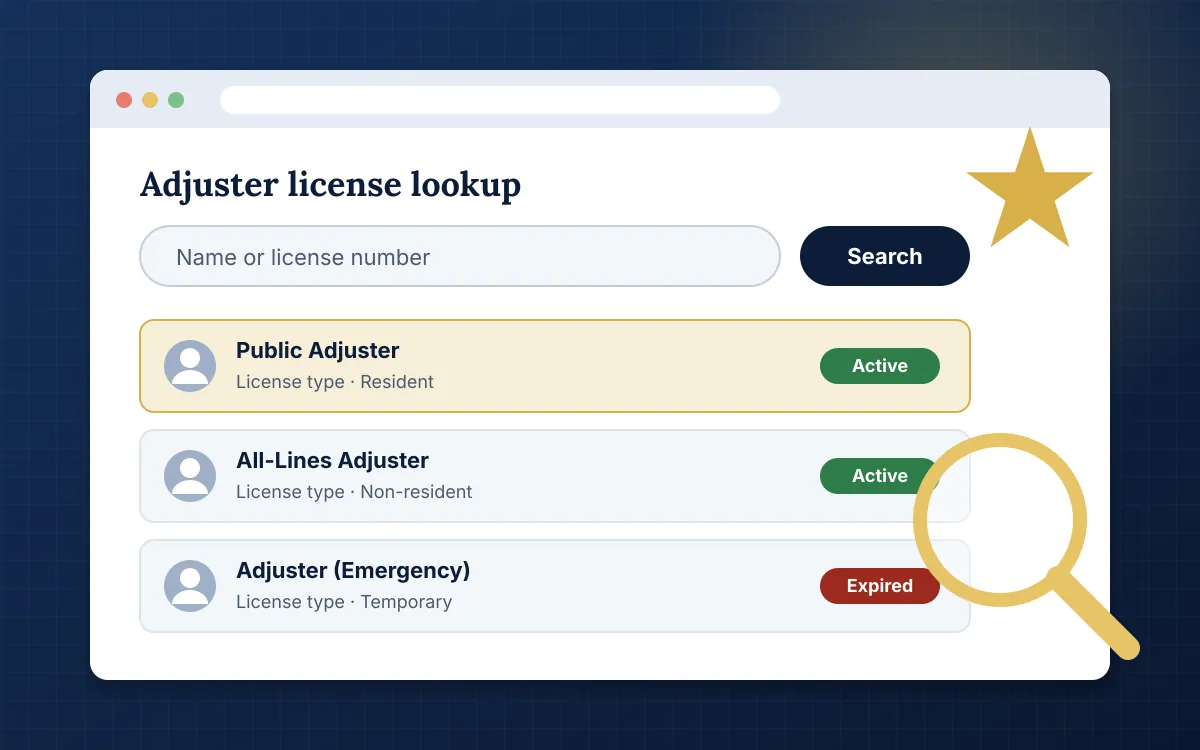
The most direct answer to “can I fire my insurance adjuster” may be: you cannot fire theirs, but you can hire your own. A licensed public adjuster represents you, handles communication with the carrier's adjuster and builds a complete estimate. You still deal with the same insurance company, but you no longer have to manage the claim yourself or rely on the carrier's adjuster to find everything.
Learn more about the difference between company, independent and public adjusters, or see our denied claim review service if your claim was rejected.
When to talk to an attorney
If you suspect bad faith, such as unreasonable denials, misrepresentation of policy terms, or refusal to pay amounts clearly owed, consult a Texas attorney. Texas has specific pre-suit notice requirements under Insurance Code Chapter 542A for many weather-related claims, generally 61 days before filing suit. A public adjuster is not a lawyer and cannot give legal advice.
What changes when you hire a public adjuster
When you sign with a public adjuster, the carrier's adjuster typically starts communicating with your representative. In DFW, where hail seasons can bury carrier staff in claims, that change alone often reduces the friction. Your public adjuster speaks the same technical language as the carrier's adjuster, knows what supporting documents will be accepted, and follows up on a schedule. You still make the final decisions on settlement, but you no longer have to chase anyone.
Fees for public adjusters in Texas are contingent and capped at 10% of the claim payment, so there is no upfront cost to have your situation reviewed.
Signs the problem is the adjuster, not the claim
Before asking for a new adjuster, it is worth separating a personality problem from a claim problem. A new adjuster is likely to help when:
- Calls and emails go unanswered for weeks at a time.
- The adjuster misstates what was said at the inspection, or what your policy says.
- Promised documents or estimates never arrive.
- The adjuster refuses to look at areas of damage you pointed out.
- The adjuster is rude, dismissive or pressures you to accept a number on the spot.
A new adjuster is less likely to help when the real issue is a coverage decision the carrier has already made, such as an exclusion for wear and tear. In that case the replacement adjuster will usually apply the same guideline. You need evidence that addresses the reason for the decision, not just a new face.
A sample reassignment request
Here is the kind of message that tends to get acted on. Adapt the facts to your claim:
Re: Claim #12345, date of loss April 2, property at [address]
I am requesting that this claim be reassigned or reviewed by a supervisor. I left voicemails for the assigned adjuster on May 1, May 6 and May 13 and emailed on May 8 with no reply. At the April 20 inspection, the adjuster agreed to include the rear slope and the fence, but the estimate dated May 2 includes neither. Photos of both are attached. Please confirm who is handling this claim and when I can expect a revised estimate.
Notice what the message does: it gives dates, quotes specific promises, attaches evidence and asks for a clear next step. That is exactly what a claims supervisor needs to justify reassigning the file.
A note from the other side
As an adjuster, I received reassignment requests. The ones that worked were specific, documented and reasonable. The carrier wants to avoid complaints and disputes, so a clear request showing real problems often leads to a new adjuster or a supervisor review. Vague complaints rarely do.
Frequently asked questions
Will asking for a new adjuster hurt my claim?
It should not. Carriers handle reassignment requests routinely. Keep it professional and focused on facts.
How long does it take to get a new adjuster?
It varies by carrier and workload. Follow up in writing if you do not hear back within a few business days.
Can I hire a public adjuster in the middle of a claim?
Yes. You can hire a public adjuster at any stage, including after an estimate, a partial payment or a denial.
Have a claim that does not add up? Get a no-cost review from a licensed public adjuster with 8 years adjusting claims.